


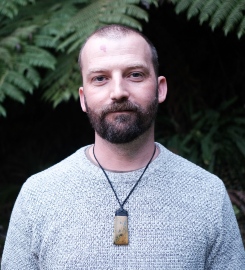
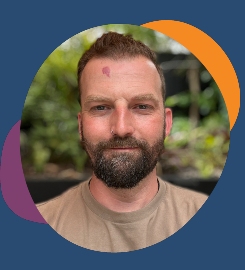
Kia ora, I’m Lee, a neurodivergent creative therapist on a mission to make therapy more creative, playful and human. I live in Tāmaki Makaurau with my partner, our kids and our dog Ludo, and try to get outside as much as I can. At home you’ll likely find me out in the garden, tinkering with my latest project in the studio or curled up with a good book.
I work with people of all ages and from all walks of life, but the majority of my clients tend to be people who’ve always felt a little bit different from everyone else. Kids or teenagers with wild imaginations, boundless energy and insatiable curiosity. Humans who make stuff: creatives, artists, designers, engineers, writers, and thinkers. Neurodivergent people with or without a formal diagnosis. Those who don’t meet society’s neurotypical expectations or fit neatly into everyone else’s boxes. The daydreamers, doodlers, punks, pirates and poets.
My practice is neuro-affirming, gentle and inclusive. My approach is grounded in curiosity and playfulness and built on a solid foundation of compassion, humility and trust. My methods are client-led and evidence based, backed by solid training and professional qualifications, interwoven with decades of lived experience.
Life is hard. Home, school, relationships, parenting, work – trying to navigate it all on your own can be confusing, stressful and overwhelming. You don’t have to do it by yourself.
Let’s figure it out together.
FAQs
Do you only work wth neurodivergent clients?
Not at all. I work with people of all ages, abilities and support needs, from 5 years old up to end-of-life patients, whether neurotypical, neurodivergent or otherwise.
I'm not an artist - Do I need to be creative?
I believe that every single one of us has creative potential, but that some of us have just lost our connection to it. I regularly work with people who aren't artists and insist they are not creative, only for them to rediscover their own creativity through the work we do together. Creative therapy is also not about the outcome, or about creating 'good' or 'beautiful' work, it is about the process, and the power of creativity to unblock us, shift perspectives and narratives and communicate and process things in ways that words cannot.
How long are sessions?
Individual sessions are usually 55 minutes long, and couples sessions or group sessions usually last 2 hours, but session lengths are always felxible and can be customised to meet your needs.
What is the neurodiversity paradigm?
The neurodiversity paradigm is a rejection of neuronormativity and the notion that there is one 'normal' or correct way for humans to hink and function. It represents a shift towards recognising and valuing the wide natural variation in human minds, and viewing neurodivergence as part of that variation, rather than a disorder or deficit. It is a move away from reducing neurodivergent individuals to a pathology or diagnosis, and towards recognising the ways that society currently creates barriers to their success and inclusion.
Do I need a diagnosis to work with you?
Definitely not. While I do work with neurodivergent people with specific formal diagnoses, a lot of my clients have no formal diagnosis at all, and a key aspect of the neurodiversity paradigm is reducing the power we give to pathological terms and specific diagnosis.
Can Creative Therapy help me with unmasking or neurodivergent burnout?
There are never any promises or guarantees with therapy of any kind, but the majority of the neurodivergent people I have worked with have shared that our work together has helped them to understand themselves much better, to find ways to begin to reduce how much and how often they mask, and to begin to embrace their authentic, unmasked selves.
Whereabouts are you based?
I work both online and in-person, but for my in-person clients I have a beautiful calm, quiet therapy space nestled in the bush in Titirangi.

-
Get Directions Rangiwai House Rangiwai Road, Titirangi, Auckland, New Zealand
-
 http://www.leeyoung.co.nz
October, 2026
Saturday
August 26,2019
- Tuesday
- 9:00am - 10:00am
Awesome Job!
We have received your appointment and will send you a confirmation to your provided email upon approval.
Get in touch
 Your request has been submitted successfully.
