


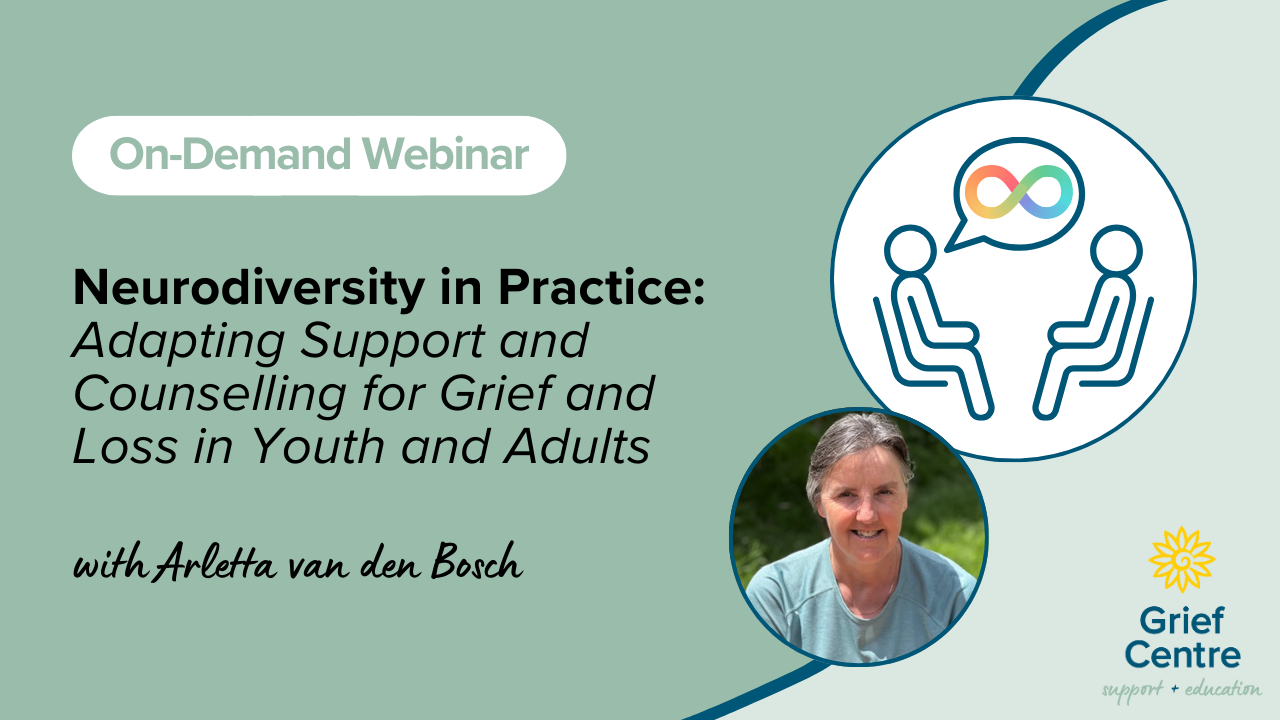
Overview
Processing the world differently is not a problem if we move away from neurotypical expectations and traditional ways of counselling, supporting, and teaching. In this training, we will briefly explore the strengths and challenges neurodivergent youth and adults often experience, and how neurodivergence influences their processing and life experiences. We will also examine a framework that can support making your practices more accessible and suitable for neurodivergent clients, whether in counselling or in other support roles.
There is currently limited research on neurodiversity and loss or grief. When supporting neurodivergent clients through loss and grief, you may encounter unexpected behaviours or perspectives. We will discuss what the existing research says and share available resources. Drawing on experience, I will also share examples of what different processing can look like when supporting neurodivergent clients experiencing loss and grief.
* As this training focuses primarily on practical strategies rather than theory alone, a prior basic understanding of autism, ADHD, dyslexia, etc. will be helpful.
Key Learning Points
· A brief overview of neurodiversity and current terminology.
· Common strengths and challenges experienced by neurodivergent people.
· Differences in processing and how these may present in daily life and support settings.
· Ways to adapt your practice to better support neurodivergent youth and adults.
· Neurodiversity and loss and grief, including:
- Current research related to neurodiversity and loss and grief.
- Differences we may observe in how grief is experienced and expressed.
- Practical strategies to support neurodivergent youth and adults experiencing grief.
- Approaches to supporting families alongside neurodivergent individuals.
- Relevant resources to support practice and further learning.

October, 2026
Monday
August 26,2019
- Tuesday
- 9:00am - 10:00am
Awesome Job!
We have received your appointment and will send you a confirmation to your provided email upon approval.
Get in touch
 Your request has been submitted successfully.
